

One of the most interesting clubs in Football for the last while has been Brentford. I’ve written about Brentford and their recruitment strategies, and will probably continue to write about Brentford in the future.
Let’s rewind to 2015. Marinus Dijkhuizen is relieved from his duties after 4 months in charge of the Bees. Up steps Lee Carsley, who at the time was in charge of Brentford’s developmental squad. Carsley remains in charge of Brentford for 4 months, until Dean Smith is appointed from EFL League Two side, Walsall FC.
One of Brentford’s biggest trends patterns from the last near decade has been appointing managers from inside their own dugout. When Dean Smith left for Aston Villa in 2018, his assistant Thomas Frank stepped up, allowing for continuity rather than disruption that comes when hiring a manager externally.
Under Dean Smith, Brentford played a forward thinking, attractive style of football in the championship. Smith’s sides typically used proactive 4-3-3 or 4-2-3-1 shapes that emphasised ball circulation, attacking fluidity and possession to create scoring chances. The full-backs and wide attackers provided width, and there was a clear intent to play pleasing, controlled football, an approach that helped establish Brentford as consistent top-half performers in the second tier.
When Frank took the hot seat, he kept the attacking style of play commonly seen under his predecessor. Where Frank differed was layering in greater tactical flexibility and defensive organization. Under Thomas, Brentford gained promotion to the Premier League, and earned themselves a consistent seat at the table, by establishing themselves as a side capable of mixing possession play, balanced defending and effective transitions against top opponents. During his tenure, Thomas Frank was able to turn Brentford into a poster child for what a modern, analytically informed Football club could be. One that is bold enough to set internal benchmarks, yet calculated enough not to be swept up in trends.
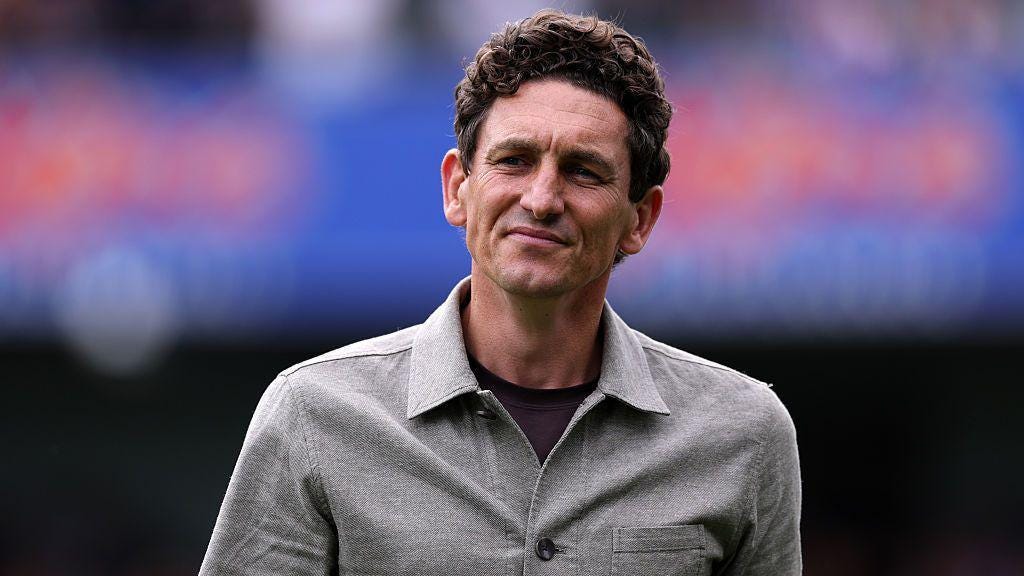
When Frank left to take charge of Tottenham Hotspur in June of 2025, Brentford chose to continue their pattern of continuity and appointed set piece coach Keith Andrews to succeed Thomas Frank. The Irish international was no stranger to coaching, having had previous roles on the staffs of MK Dons, Sheffield United, and the U-21 and Senior National Teams of the Republic of Ireland. Having joined Frank’s staff in 2024, his rapport within the club allowed for him to become the obvious choice.
In an interview given to TNT sports, Director of Football Phil Giles had this to say about Keith Andrews promotion: “He understands the players in the building and the way we’ve played and trained under Thomas Frank.” Giles continues by saying, “He’s a very good coach and has very good ideas of how we want the team to improve. We were looking for someone not just to maintain what we’ve been doing but actually try and get better.” (TNT Sports)
Rather than inheriting an entirely blank slate, Andrews was able to inherit a tactical foundation built in exploiting the weaknesses of opponents. Andrews now has Brentford on track for their best Premier League season yet, having a win percentage of just about 50 percent at this stage in the campaign.
From a strategic perspective, Brentford offer a compelling alternative to the volatility of managerial change. Instead of forcing players and staff to relearn a new tactical philosophy every 12 to 18 months, Brentford’s tactical foundation allows for tweaks and adjustments to be made on top of previously learned principles of play. This model of controlled adaptation allows for each managerial transition to be built on what came before, rather than tearing the foundation of the team down. This is an important lesson in restraint, in a sport obsessed with disruption.
As Brentford continue to punch above their weight, both in results and strategic ambition, the internal promotion ethos reinforces a narrative of continuity, rooted in principle, can be one of football’s most important assets.